Speakers
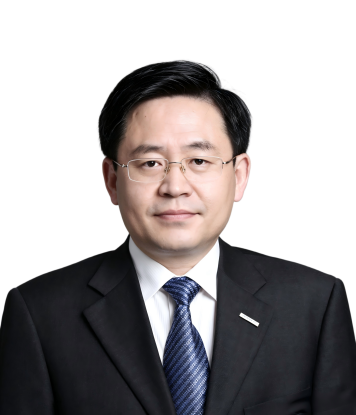
Endong Wang
Chinese Association for Artificial Intelligence
Biography:
Endong Wang is a distinguished computer scientist and engineer, as well as a leading expert and industry pioneer in the field of server technology in China.Long engaged in the architecture design, key technology research, and engineering implementation of server systems, he led the development of China's first 32-way high-end fault-tolerant computer system, which has since been widely adopted. His honors include one First Prize and two Second Prizes of the National Science and Technology Progress Award, the Ho Leung Ho Lee Foundation Prize for Scientific and Technological Innovation, and the Supreme Science and Technology Award of Shandong Province.
Title: Reflections on Server Development for Intelligent Computing Centers
Abstract:
The rapid development of the artificial intelligence industry has profoundly reshaped the factors of production and driven the swift expansion of intelligent computing centers as new infrastructure for computing power, with demand currently outstripping supply. As the basic unit of computing power supply, servers face significant challenges in performance, efficiency, and energy consumption that constrain overall system performance. Overcoming these challenges requires foundational and system-level innovation advancing in tandem, laying a solid foundation for the high-quality development of intelligent computing centers.
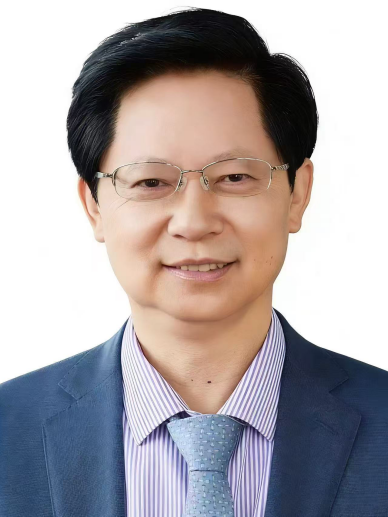
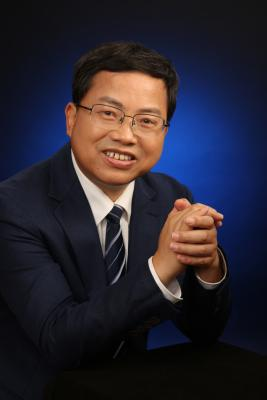
Yongduan Song
Chongqing University
Biography:
Yongduan Song, Internationally renowned expert in automation and artificial intelligence. He is a Foreign Member of the Chinese Academy of Engineering. He currently serves as the Editor-in-Chief of IEEE Transactions on Neural Networks and Learning Systems (TNNLS) and Founding Editor-in-Chief of Journal of Automation and Intelligence. He is an IEEE Fellow, Fellow of the Chinese Association of Automation (CAA), and Fellow of the Chinese Association for Artificial Intelligence (CAAI).
Prof. Song has led over 30 major national and ministerial/provincial key research projects. He holds more than 100 invention patents granted in China, the United States, and Japan.
Title: From Black Box to Physical Interpretability: Trustworthy Computing for AI-Driven Decision-Making and Control
Abstract:
This report centers on the theme “From Black-Box AI toward Trustworthy Physical Intelligence” and presents two families of approaches: PINN and PIRL. By embedding physical laws, dynamical constraints, and safety boundaries into models, these methods improve the interpretability, robustness, and safety of AI for prediction, decision-making, and control. Drawing on applications including autonomous driving, robotics, and industrial processes, this report further discusses challenges such as model mismatch and uncertainty verification, together with future research directions.

Jon Garibaldi
University of Nottingham Ningbo China
Biography:
Prof. Jon Garibaldi is currently the Provost of the University of Nottingham Ningbo China, and a member of the University of Nottingham Executive Board. His main research interest is in developing intelligent techniques to model human reasoning in uncertain environments, with a particular emphasis on the medical domain. He has published over 300 papers in internationally peer-reviewed venues, and has led or participated in a wide range of multi-disciplinary research projects worth over ¥750M (£80M). He is a Fellow of the IEEE, was the Editor-in-Chief of IEEE Transactions on Fuzzy Systems from 2017 to 2022, and is currently Vice President of Publications of IEEE Computational Intelligence Society.
Title: Uncertainty in Artificial Intelligence: The Value and Future of Fuzzy Systems
Abstract:
Fuzzy sets and systems are a mature technology, now in existence for almost 60 years, and one of the three main pillars of Computational Intelligence. Whilst fuzzy sets and systems have made significant impact in CI over the years, recently there has been a relative decline in interest, with (particularly) Deep Learning and Large Language Models receiving huge attention worldwide and largely dominating AI research. In this talk, I will discuss the importance of handling uncertainty in all AI systems, and argue that fuzzy-based research still has an important role to play in the future of AI. As part of this, I will identify and discuss some way in which fuzzy based approaches can contribute to the handling of uncertainty in AI research.
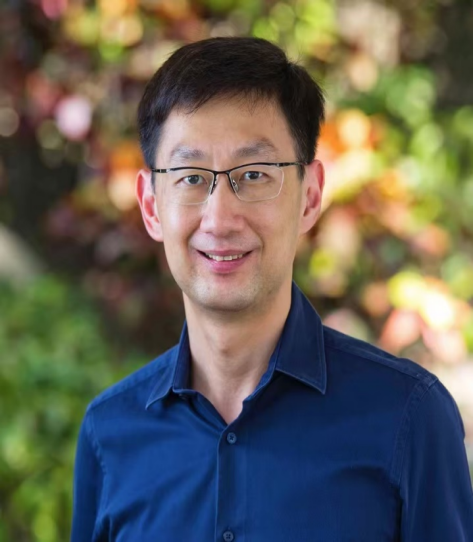
KAY CHEN TAN
The Hong Kong Polytechnic University
Biography:
Professor Kay Chen Tan is a Chair Professor (Computational Intelligence) of the Department of Data Science and Artificial Intelligence, The Hong Kong Polytechnic University. He has co-authored eight books and published over 300 peer-reviewed journal articles. Prof. Tan was the Vice-President (Publications) of the IEEE Computational Intelligence Society from 2021-2024. He was the Editor-in-Chief of IEEE Transactions on Evolutionary Computation from 2015-2020 and IEEE Computational Intelligence Magazine from 2010-2013. Prof. Tan is an IEEE Fellow and an Honorary Professor at the University of Nottingham in the UK. He is also the Chief Co-Editor of the Springer Book Series on Machine Learning: Foundations, Methodologies, and Applications.
Title: Algorithm Modelization: Evolving Optimization Algorithms into Learnable and Evolvable Intelligence
Abstract:
Traditional optimization algorithms rely on repeated manual redesign. This talk proposes the new paradigm of Algorithm Modelization, which treats algorithm execution trajectories as computational experience and builds the A2M model. A two-stage “imitation-to-surpassing” training integrates knowledge from evolutionary, Bayesian and gradient-based optimizers. The model shows strong generalization across problems and extrapolates to higher unseen dimensions. It can keep absorbing new algorithms for progressive enhancement. Experiments validate this paradigm, paving the way toward general optimization models that accumulate and evolve without hand-crafted rules.
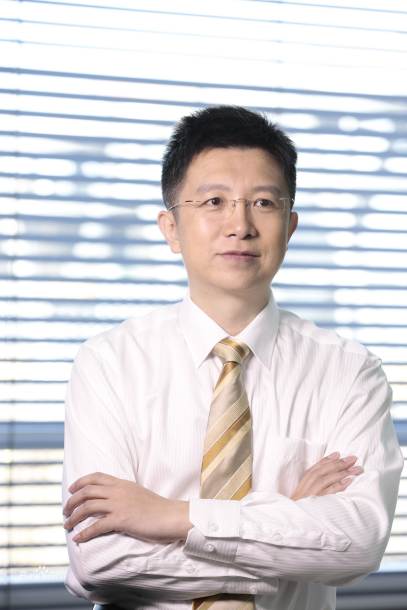
Haifeng Wang
Baidu Online Network Technology (Beijing) Co., Ltd.
Biography:
Haifeng Wang, the Chief Technology Officer of Baidu and the director of the National Engineering Research Center for Deep Learning Technology and Applications. He served as the president of the Association for Computational Linguistics (ACL) in 2013, and he is the Founding Chair of the ACL Asia-Pacific Chapter. He is an ACL Fellow, an IEEE Fellow, and an academician of the International Eurasian Academy of Sciences. He serves as the vice president of the China Federation of Engineers, the Chinese Institute of Electronics and the Chinese Information Processing Society. He won the second prize of the National Technological Invention Award, the second prize of the National Science and Technology Progress Award, the China Patent Gold Award, the first prize of the Beijing Science and Technology Progress Award, the first prize of the Science and Technology Progress Award of the Chinese Institute of Electronics, etc. He has been awarded the title of "National Outstanding Engineer", and he has also received the National Innovation and Excellence Award.
Title: Deep Learning and AI for Science
Abstract:
Artificial intelligence is now driving a paradigm shift in scientific research. This report reviews the evolution of scientific paradigms from Experimental Science, Theoretical Science, Computational Science to Data-Intensive Science, and illustrates how deep learning platforms empower the entire workflow of scientific research through capabilities, including high-order automatic differentiation, automatic compiler optimization, complex number systems, distributed training, and multi-hardware adaptation. Applied in fields such as industrial simulation, materials design, and life sciences, the deep learning platforms accelerate scientific discovery and technological innovation.
Jinshu Su
Academy of Military Sciences
Biography:
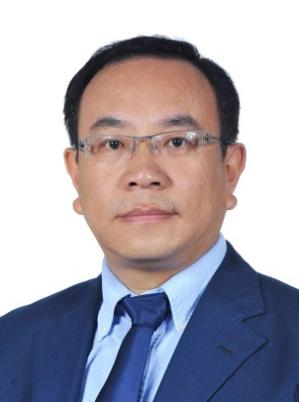
Professor Jinshu Su has long been engaged in research on high-performance network technologies. He serves as the lead of the national-level Innovation Team for Network Technology and Chief Designer of a network system. He acted as Chief Scientist for a 973 Program project and Deputy Chief Designer of the Galaxy-Tianhe Supercomputer.
He proposed methods including Domain-Specific Network (DSN), and developed more than 20 types of equipment. The Galaxy Yuheng high-performance routers led by him are national landmark achievements. The multi-network secure interconnection equipment is indispensable in relevant fields, and the series of security monitoring equipment safeguards national cyberspace security.
His honors include 4 National Science and Technology Progress Awards (2 Second Prizes, 1 Special Prize, 1 First Prize), and CCF Wang Xuan Award.
Title:Ten Trends of Large-Scale Intelligent Computing Systems Architecture
Abstract:
Since 2012, the growth rate of intelligent computing has outpaced Moore’s Law, posing entirely new challenges to computer architecture. The 2026 Report on the Work of the Government issued by the State Council proposed launching new infrastructure projects including ultra-large-scale intelligent computing clusters. Taking into account the characteristics of human intelligence featuring “small computing power and large networks”, enabling technologies such as optical transmission and switching with lower power consumption, as well as new architectures and mechanisms brought by technological innovation, this report puts forward ten preliminary judgments on the development trends of ultra-large-scale intelligent computing clusters from four dimensions: cluster architecture, computing nodes, network technologies and technology ecosystem.
Hong Liu
Biography:
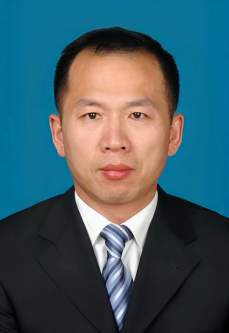
Professor Hong Liu is a leading talent in scientific and technological innovation under the first batch of the National "Ten Thousand Talents Program", and an expert of the Overall Expert Group for the National Key R&D Program "Intelligent Robots". He has long served as Vice President of the Chinese Association for Artificial Intelligence (2014—2025).His achievements in the field of robotic visual perception and autonomous learning have been cited by domestic academic peers for more than 16,000 times. He has successively won the National Aerospace Science and Technology Progress Award, the Wu Wenjun Artificial Intelligence Natural Science First Prize, the Natural Science First Prize of Shenzhen Municipality and Guangdong Province, and was nominated by Shenzhen Municipality for the 2025 National Natural Science Award.
Title: Multiplex Visual features Interactive Learning for Embodied Intelligence
Abstract:
Visual perception in embodied environments is a major challenge in advancing robotics toward intelligent and industrial applications. This report provides a comprehensive and systematic analysis of the evolution of deep learning frameworks, revealing the high-dimensional spatial-semantic constraints that visual perception learning must satisfy in embodied environments. By introducing constraints based on feature low-rankness, spatiotemporal continuity, and object constancy, a mechanism for multilayer interactive learning of multiplex visual features is established. Representative achievements in robotic visual perception in complex environments, together with a demonstrative application platform for intelligent eldercare robots, highlight the academic impact and practical value of these research contributions.

Maoguo Gong
Inner Mongolia Normal University, Xidian University
Biography:
Professor Maoguo Gong is the Director of Key Laboratory of Collaborative Intelligence Systems, Grade-II Professor and doctoral supervisor, is a national leading talent and IEEE Fellow. He holds multiple administrative positions including Vice President of Inner Mongolia Normal University, Director of two key laboratories, and winner of the Special Government Allowance of the State Council. His research centers on basic theories and key technologies of artificial intelligence. He presides over over 30 national research projects, has published more than 200 papers, and gained five provincial/ministerial science and technology honors. He takes editorial roles in multiple academic journals and acts as Fellow & Standing Director of the Chinese Association for Artificial Intelligence, Director of Inner Mongolia Association for Artificial Intelligence.
Title: Collaborative Intelligence Systems for AI application in mega scenarios
Abstract:
The development of information technology has propelled technological reform in artificial intelligence (AI). To address the needs of diversified and complex applications in mega scenarios, AI has been increasingly trending towards intelligent, collaborative, and systematized development across different levels and tasks. To deploy AI models in diverse and complex mega application scenarios in the future, it is necessary to build collaborative intelligence systems by integrating multiple participants. This talk reviews research on systematic, intelligent, and collaborative AI technology from the perspective of individual collaboration, decision variables collaboration, multi-task and multi-party collaboration, and macro-level collaboration such as terrestrial-satellite collaboration, space-air-ground-sea collaboration, vehicle-road-cloud collaboration.
Yan Peng
Chongqing University of Technology
Biography:
Peng Yan, Ph.D., Professor and Doctoral Supervisor, serves as Vice President of Chongqing University of Technology and Dean of its School of Mechanical Engineering.
He is a National High-level Leading Talent in Scientific and Technological Innovation, a national selectee of the New Century Hundred-Thousand-Ten Thousand Talent Project, an expert entitled to the State Council Special Government Allowance, a recipient of the Ministry of Education’s Program for New Century Excellent Talents in University, and an awardee of the Fok Ying Tung Education Foundation. He is a Fellow of the International Institute of Acoustics and Vibration (IIAV Fellow), and Vice Chair of the Plastic Engineering Branch of the Chinese Mechanical Engineering Society.
His research centers on digitalization and intelligentization of metallurgical equipment technologies. He has won 2 Second Prizes of the National Science and Technology Progress Award and 6 provincial and ministerial first prizes, published over 200 academic papers, holds 69 granted invention patents, and has released 3 monographs and edited volumes.
Title: Scenario-Driven Research and Development Practice of Industrial Intelligent Agents
Abstract:
Currently, the intelligent manufacturing sector has fully shifted from advancing AI R&D to promoting scenario deployment and industrial empowerment, with a focus on industrial intelligent agents and scenario-driven development.
Centered on upgrading traditional industries and advancing the digital-intelligent transformation of manufacturing, this report presents two typical cases: digital-intelligent rolling through equipment-technology integration and intelligent welding of complex steel structures. It systematically elaborates a scenario-centric approach to deepening AI deployment across R&D, design, manufacturing, quality inspection and operation & maintenance, supporting scenario-driven technological breakthroughs and demonstration applications.